My mother’s memory faded in pieces — first misplaced keys, then forgotten appointments, then my face.
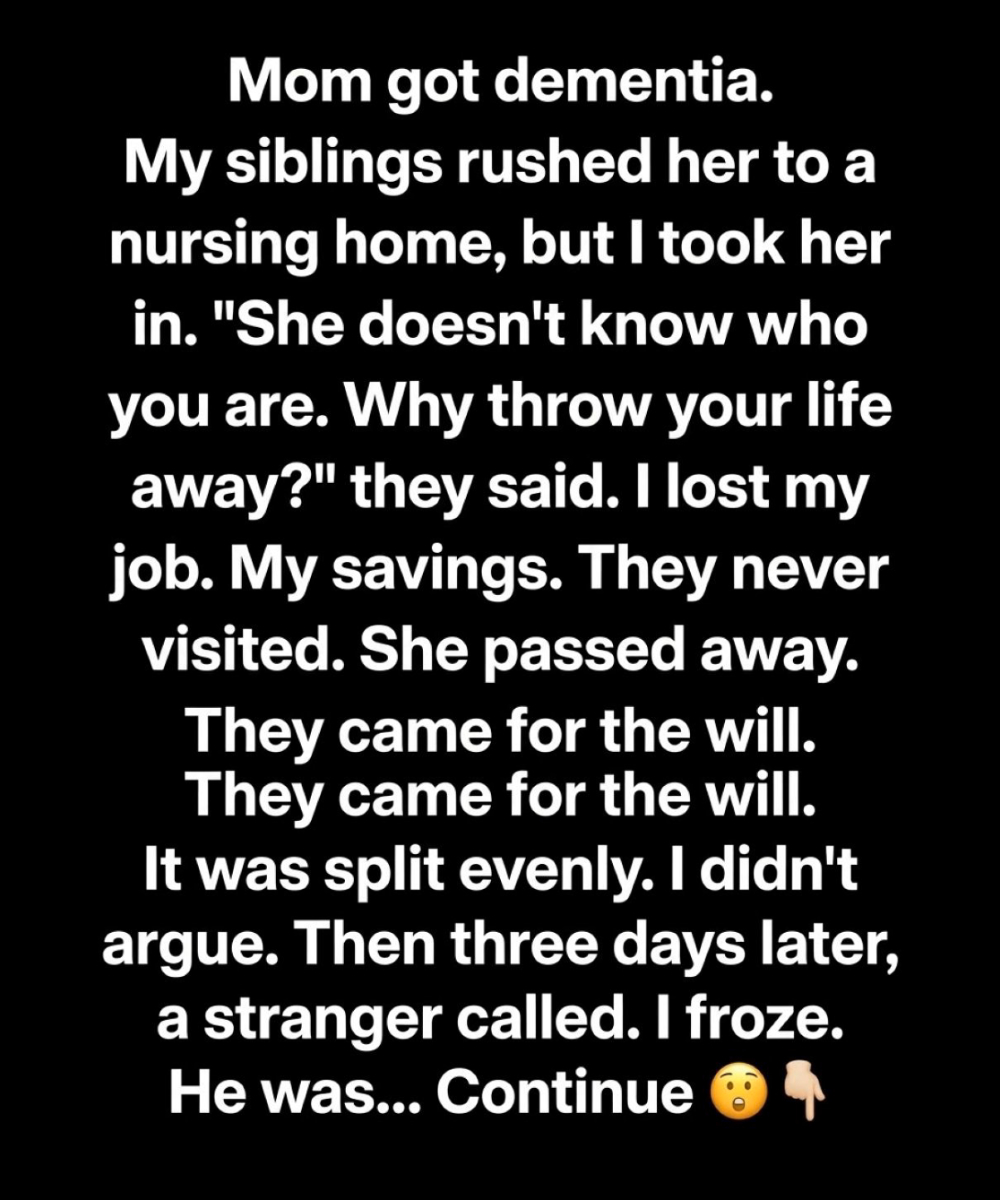
When doctors spoke carefully about progression, my siblings discussed facilities and costs. I listened — and decided she would stay with me. Not because nursing homes are wrong, but because she feared unfamiliar places. Comfort mattered more than efficiency.
At first, the changes were small. Then they were everything. I reduced my work hours. Savings went to medication and safety equipment. My days became routines of meals, bathing, and soothing sudden fear in her eyes. My siblings visited rarely.
Some days she hummed softly. Other days were heavy with confusion. But I learned something: love does not require recognition. It is enough to offer safety.
She passed quietly before dawn, her hand in mine.
Afterward, my siblings returned to divide the estate evenly, just as she had planned long ago. I said nothing about the years I gave. Peace mattered more than explanation.
Three days later, an old colleague called. My mother had left a small private account in my name — and a letter, written before her words disappeared.
She thanked me for staying. For making her feel safe. She said she knew what I had given up, even when she could no longer say it.
Holding that letter, I understood something simple and powerful:
Memory may fade.
Names may disappear.
But love leaves a deeper record.
I didn’t care for her to be rewarded. I cared for her because she was my mother.
The letter wasn’t payment.
It was proof that love had been felt — and that made every difficult day worth it.